The US just locked its battery waste at the border
From 27 August 2026, lithium-ion "black mass" and tungsten scrap can no longer move freely out of America. It's a customs rule on paper — but it's really a message about who gets to keep the metals inside used batteries and old tools.
01 — The rule, plainly
What the US actually did
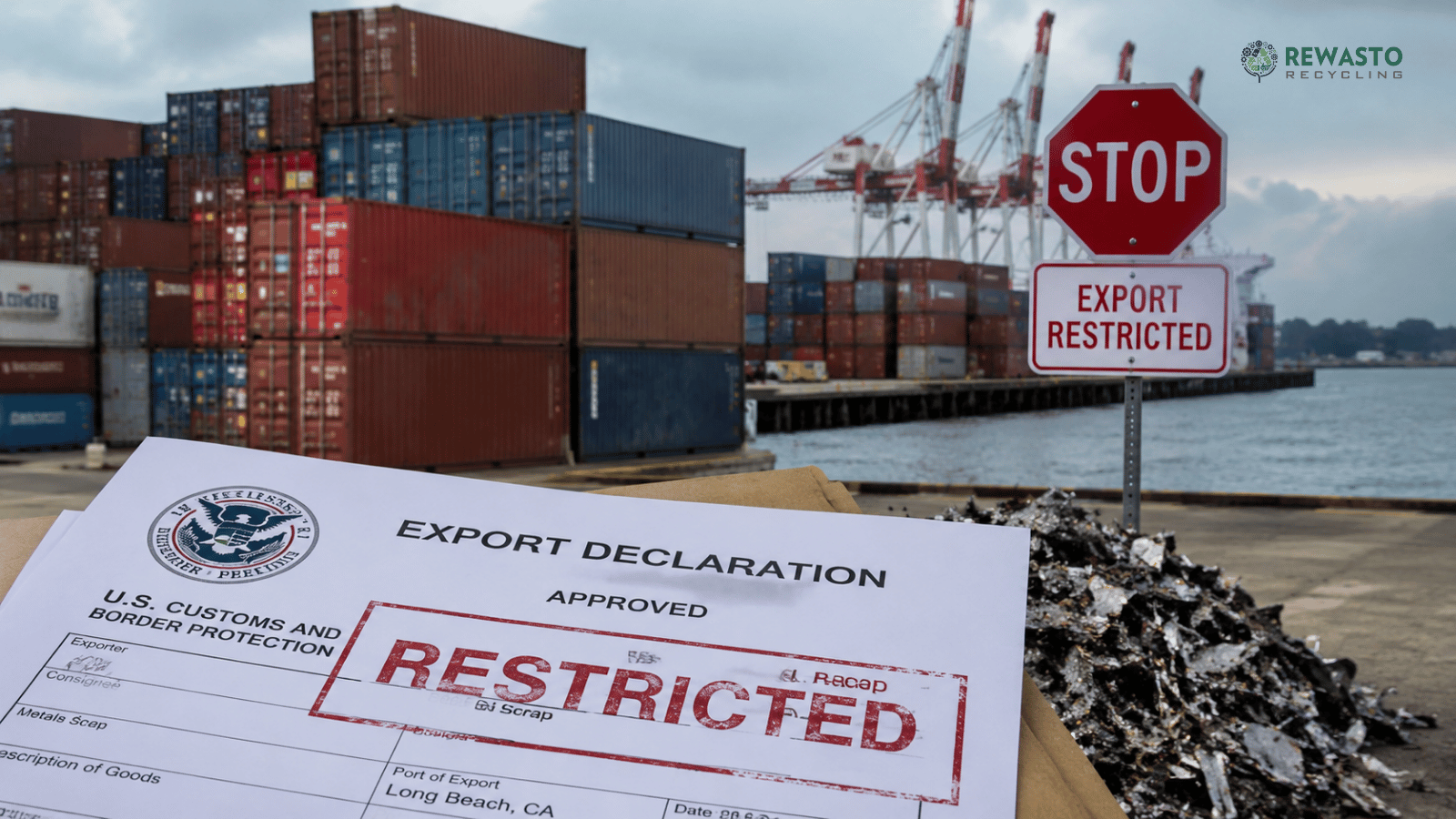
On 6 August 2026, the US Bureau of Industry and Security (BIS) published a temporary final rule under the Defense Priorities and Allocations System (DPAS), a mechanism of the Defense Production Act. It follows a 30 July memorandum in which the President directed the Commerce Department to treat "recoverable critical minerals and materials" as essential to national defense.
The rule takes effect on 27 August 2026 and requires every US person selling covered black mass or tungsten waste and scrap to allocate 100% of their monthly sales to domestic buyers, unless BIS grants a specific adjustment or exception in advance. Exporting to a non-US buyer now needs a separate DPAS authorisation — on top of any export licence already required. The order stays in force for one year, through 27 August 2027, while BIS gathers public comment on whether to extend or adjust it.
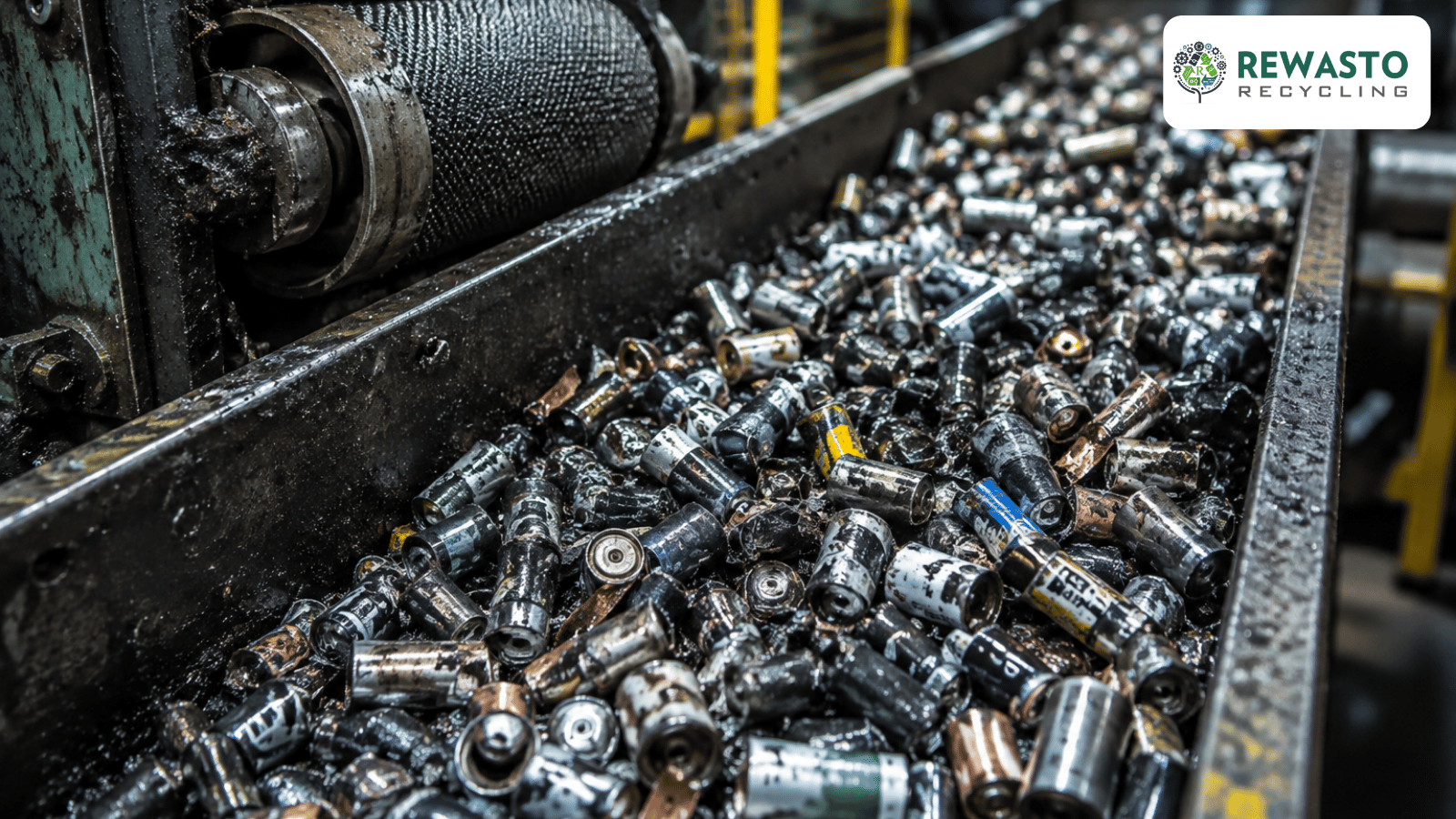
Any shredded lithium-ion battery scrap containing cathode material (lithium, cobalt, nickel, manganese), anode material (graphite, silicon) or other residual cell material, falling under the covered Schedule B export codes.
Reaction has been mixed. A Washington-based critical-minerals policy analyst welcomed the rule as recognition that recoverable material sitting in scrap deserves the same strategic attention as freshly mined ore. A domestic tungsten recycling executive was more guarded — calling the restriction useful, but ultimately a stopgap, since the US still doesn't process anywhere near enough of the scrap it already generates.
Paraphrased from industry commentary — see Sources below02 — The strategic logic
Why a pile of "waste" suddenly became a national-security asset
For decades, spent batteries and metal-cutting scrap were treated as exactly what they look like — garbage, sold to whoever paid the best price abroad. That's changing fast. Countries have realised that scrap containing lithium, cobalt, nickel and tungsten is not waste at all; it's ore that's already been mined, refined once, and is sitting in a warehouse. Exporting it means exporting a finished head-start on your own supply chain.
This US rule doesn't stand alone. China restricted tungsten exports last year, and prices for the metal — used to harden steel, cutting tools and munitions — jumped sharply worldwide. The US move reads as a direct answer: if the world's dominant processor of critical minerals can turn off a tap, the world's biggest waste generator can do the same with its own scrap.
There's an honest gap, though. Two of the best-known US battery recyclers, Li-Cycle and Ascend Elements, both filed for bankruptcy protection in the past 18 months. The country generates plenty of black mass — it just doesn't yet have enough domestic refining capacity to turn all of it into battery-grade metal. Locking the export door helps only if the room behind it gets built out.
Why the US is nervous about depending on others
Illustrative — widely cited industry estimates of China's share of global mining/processing (figures vary by source and year)Directional estimates only, based on USGS / IEA / trade-press reporting — not official BIS figures.
03 — The bigger pattern
Waste is being re-routed into the mineral supply chain
Strip away the trade-law language and one trend is unmistakable: what used to be a linear "use it, bin it" chain is closing into a loop. Governments are now treating end-of-life batteries and metal scrap as the first stage of the mineral supply chain, not the last stage of the waste chain.
Spent battery & scrap
End-of-life EV, portable and industrial batteries; carbide tools and cutting scrap containing tungsten.
Recyclable material
Shredding, sorting and processing produce "black mass" and tungsten concentrate — refined, concentrated, ready to re-enter industry.
Critical mineral supply chain
Lithium, cobalt, nickel, manganese and tungsten flow back into new batteries, alloys, EVs and defence manufacturing — this time, kept close to home.
04 — Scope
What's actually covered — and what's simply "on watch"
It's worth being precise here, because the wider critical-minerals conversation often blurs materials that this specific rule does and doesn't touch.
- Black mass — lithium, cobalt, nickel, manganese, graphite, silicon from shredded Li-ion cells
- Tungsten waste and scrap under the listed Schedule B codes
- Must be 100% allocated to US buyers from 27 Aug 2026 unless exempted
- Copper — central to grid, EV and defence demand; not named in this order
- Rare earth elements — already subject to separate export-control battles globally
- Other "strategic" metals likely to see similar domestic-first policy over time
05 — The India lesson
India has almost no lithium or cobalt in the ground. That's exactly why this matters here.
India imports the overwhelming majority of the lithium, cobalt, nickel and tungsten it needs for EVs, electronics and defence-grade alloys. When a major supplier decides to keep its recoverable scrap at home, every importing country — India included — is nudged toward the same conclusion: the metals inside your own waste stream are the closest thing you have to a domestic mine.
India, in fact, is already partway through writing its own version of this playbook — just through long-term regulation rather than a sudden emergency order. The Battery Waste Management Rules, 2022 (notified by the MoEFCC on 22 August 2022) put Extended Producer Responsibility at the centre of battery recycling, with recovery targets that step up year on year.
India's EPR material-recovery targets (EV & portable batteries)
Under the Battery Waste Management Rules, 2022Automotive & industrial batteries carry a separate, lower target — 60% recovery by FY 2026-27. A 2025 amendment further requires new batteries made in India to contain a minimum share of recycled lithium, cobalt and nickel from FY 2027-28 — India's own recycled-content mandate, arriving on a similar timeline to the US move.
The lesson from Washington isn't "India should ban exports too." It's narrower and more useful: treat scrap as inventory, not garbage — and build the domestic loop before a crisis forces it. India's EPR regime already points the right direction; the gap now is execution — more registered recyclers, tighter reverse logistics, and producers who see compliance as a supply-chain strategy, not a paperwork exercise.
06 — What to do about it
A practical checklist for Indian producers, OEMs & bulk consumers
Whether you manufacture batteries, sell electronics at scale, or simply generate large volumes of e-waste as a business — here's how to get ahead of where this is heading.
Register on the CPCB EPR portal now
Non-registration under the Battery Waste Management Rules attracts direct Environmental Compensation. Don't wait for an audit to trigger it.
Map your historic sales & battery inventory
Your recovery obligation is calculated against what you've sold historically — know the number before it's calculated for you.
Route waste only through authorised recyclers
Informal channels don't generate valid EPR credits and carry fire, environmental and compliance risk.
Build reverse logistics into your operations
Collection infrastructure is the bottleneck most producers underestimate — plan it in before targets tighten further.
Get ahead of the FY 2027-28 recycled-content mandate
Lock in long-term recycled lithium, cobalt and nickel supply relationships now, rather than scrambling once the rule bites.
Track compliance monthly, not annually
EPR credits and shortfall penalties are easier to manage as an ongoing operational metric than a year-end surprise.
07 — Where we operate
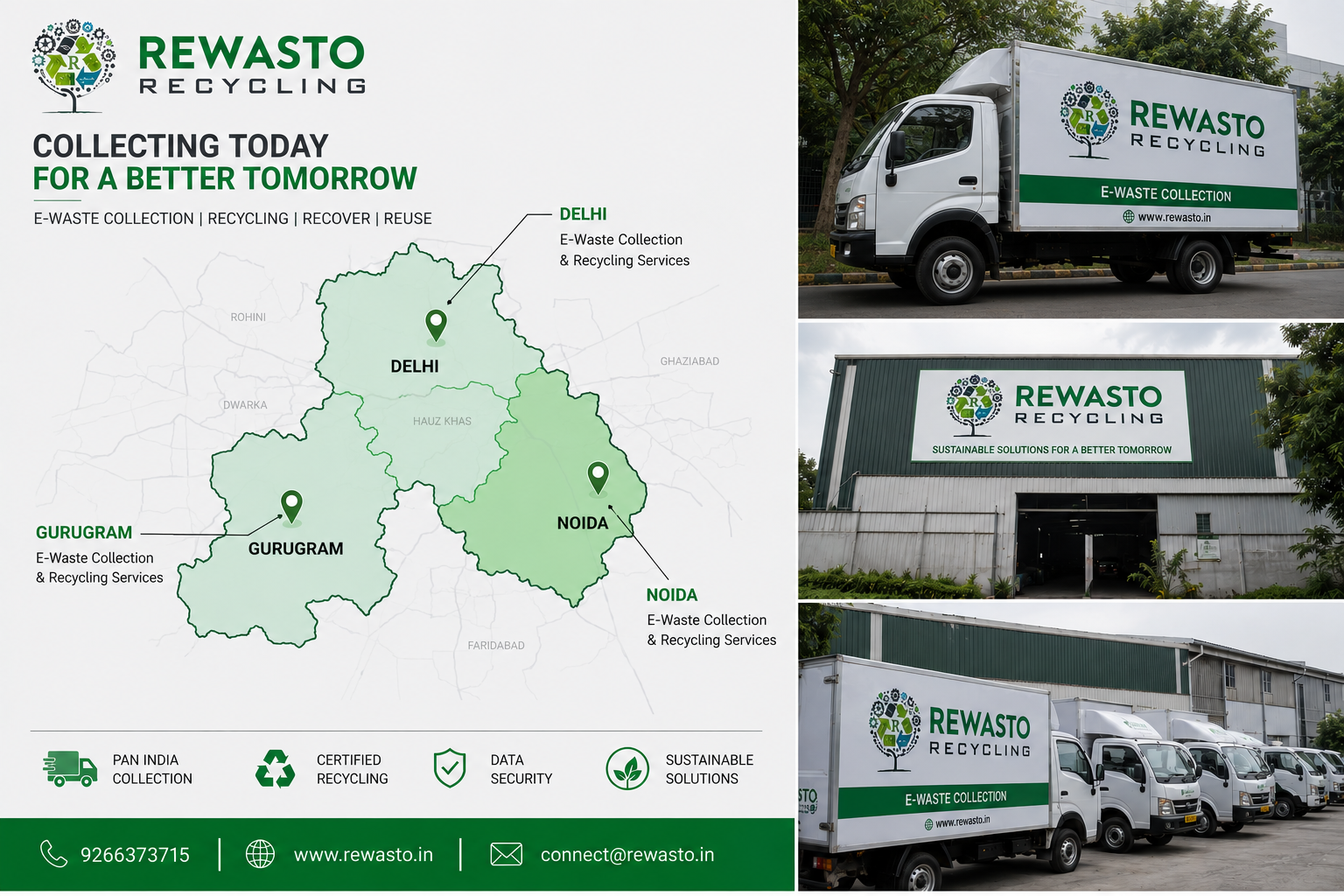
EPR & battery recycling across Delhi NCR
Rewasto Recycling runs certified e-waste and battery recycling operations out of Greater Noida, serving producers, corporates and bulk consumers across the National Capital Region.
EPR compliance & e-waste recycling for Gurugram's corporate and manufacturing hubs — collection, certification and reporting handled end to end.
Battery and electronics recycling for Noida & Greater Noida's industrial belt, close to Rewasto's own processing facility.
EPR certification and secure e-waste collection for offices, retailers and institutions across the Delhi capital region.
08 — FAQ
Quick answers
What is "black mass" in battery recycling?
Black mass is the shredded, powdery output left after a spent lithium-ion battery is dismantled and processed. It contains the cathode metals (lithium, cobalt, nickel, manganese) and anode materials (graphite, silicon) that recyclers later refine back into battery-grade material.
Does this US restriction directly affect India?
India isn't the named target, but any Indian buyer sourcing US-origin black mass or tungsten scrap will find it harder to access, and the policy direction — keep recoverable minerals at home — is one India's own EPR framework already shares.
What are India's EPR recovery targets for batteries?
Under the Battery Waste Management Rules, 2022: 70% recovery in FY 2024-25, 80% in FY 2025-26, and 90% from FY 2026-27 onward for EV and portable batteries, with a lower 60% target for automotive/industrial batteries by FY 2026-27.
How do I get my company EPR-certified in India?
Register as a producer/importer/recycler on the CPCB EPR portal, calculate your obligation from historic sales, and route your battery or e-waste volumes through an authorised recycler like Rewasto to generate valid EPR credits.
Is copper affected by this US rule?
No — this specific BIS rule covers black mass and tungsten waste/scrap. Copper isn't named in the order, though it remains part of the broader global conversation on critical-minerals security.
Talk to Rewasto
Turn your compliance obligation into a resource strategy
Whether it's battery EPR, e-waste collection, reverse logistics or secure data destruction — Rewasto Recycling handles it end to end across Delhi NCR, from Greater Noida.
Sources & further reading
- Bloomberg — US Bans Export of Tungsten, Battery Waste to Secure Supplies
- US News — Trump Admin Blocks Tungsten, Battery Waste Exports
- Recycling Today — Commerce Department Restricts Black Mass, Tungsten Scrap Exports
- Resource Recycling — New Federal Rule Restricts Black Mass, Tungsten Scrap Exports
- Recycled Materials Association — Commerce Dept. Temporary Final Rule
- IEA — Battery Waste Management Rules 2022 (India)
- Shakti Sustainable Energy Foundation — Battery Waste Management Rules, 2022
- Gravita India — Battery Waste Management Rules 2025 Compliance Guide