The Thread That Doesn't End
Filatex India is putting ₹300 crore behind a plant in Gujarat built to turn worn-out polyester back into virgin-grade yarn: a bet that circular textiles in India are ready to move past pilot lines and into real capacity.
What Filatex just committed to
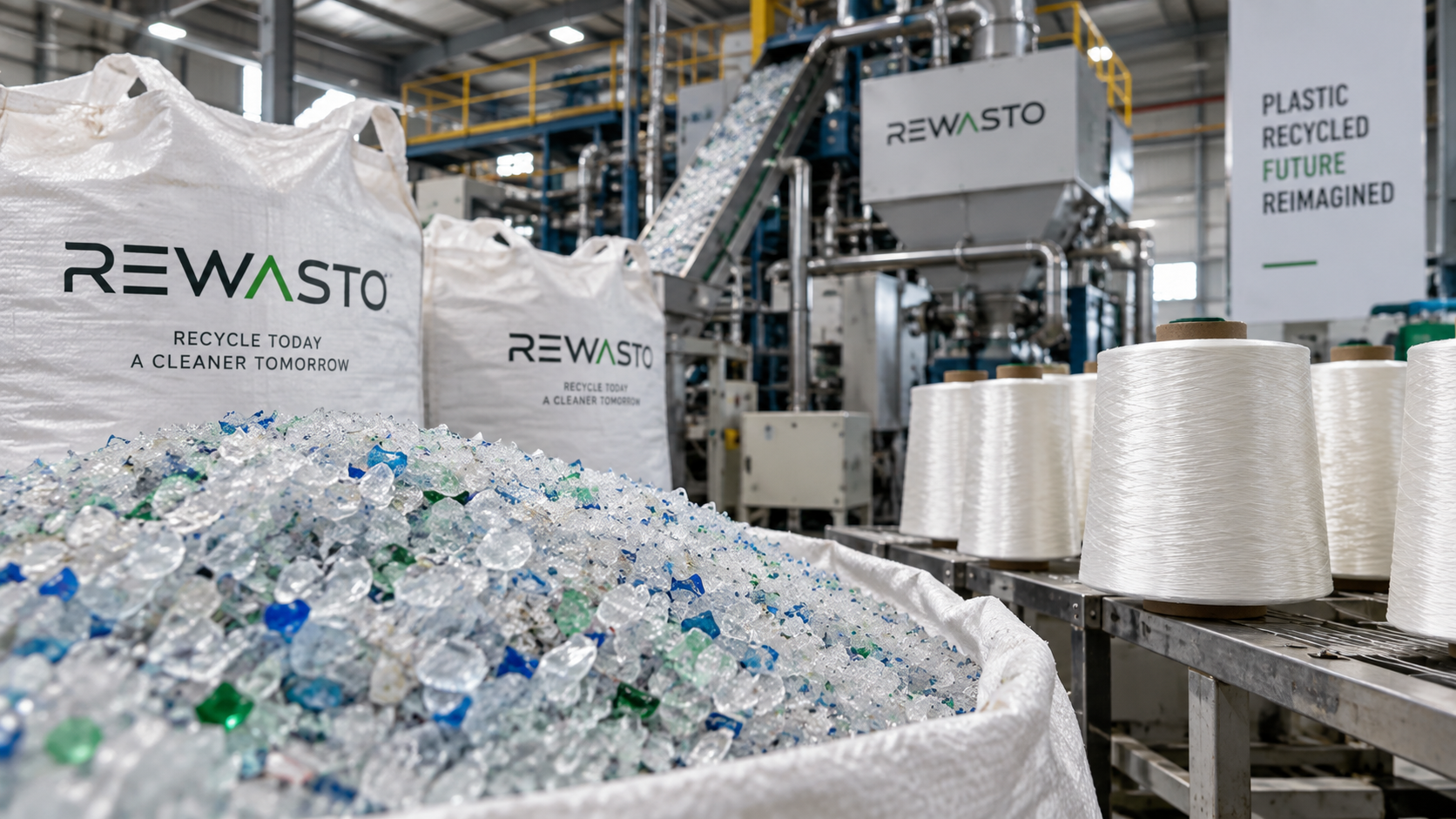
Filatex India has confirmed a ₹300 crore investment (roughly $32 million) in a textile-to-textile polyester recycling plant at Dahej, Gujarat, the same industrial belt where the company has run its yarn manufacturing operations for three decades. The plant is being built by Texfil Private Limited, a wholly owned Filatex subsidiary, and its recycled output will be sold under the brand name ECOSIS™.
Filatex is targeting commissioning by September 2026. Once running, the facility is designed to process 26,750 tonnes of polyester textile waste a year, converting it into polymer and yarn the company says is chemically equivalent to virgin material. At steady state, Filatex expects the plant to add ₹75–80 crore to annual EBITDA.
| Developer | Texfil Private Limited (wholly owned subsidiary of Filatex India) |
| Brand | ECOSIS™ |
| Location | Dahej, Gujarat |
| Investment | ₹300 crore (≈ $32 million) |
| Capacity | 26,750 tonnes per annum |
| Feedstock | Pre- and post-consumer polyester textile waste |
| Technology | Chemical recycling: depolymerization, purification, regeneration |
| Target commissioning | September 2026 |
| Expected annual EBITDA (steady state) | ₹75–80 crore |
| Commercial partner | Decathlon India (MoU signed December 2025) |
Why fibre-to-fibre recycling is the harder bet
Most "recycled polyester" sold today isn't recycled from polyester at all: it's recycled from PET bottles, melted down and respun into fibre. That's a genuinely useful way to keep plastic out of landfill, but it's largely a one-way street: bottle-derived fibre is difficult to spin back into a bottle, or to recycle a second time as fibre, without losing quality. Textile-to-textile recycling is a different, harder problem: taking a worn-out polyester shirt or a factory offcut and turning it back into polyester of the same quality, repeatedly.
Filatex has said it validated the loop by cycling the same material through the process repeatedly: recycling it, converting it into product, then breaking it down again. That's the kind of repeat-cycle proof a genuinely closed loop needs to hold up. The company arrived here in stages: a 1.5-tonne-a-day pilot line has run at Dahej since 2022, first on PET bottle and polyester-yarn waste, and more recently alongside a dedicated ~800 kg/day textile-to-textile line validating the process on real garment and home-linen waste. The ₹300 crore plant now under construction scales that R&D up to commercial volume.
The problem this is trying to solve
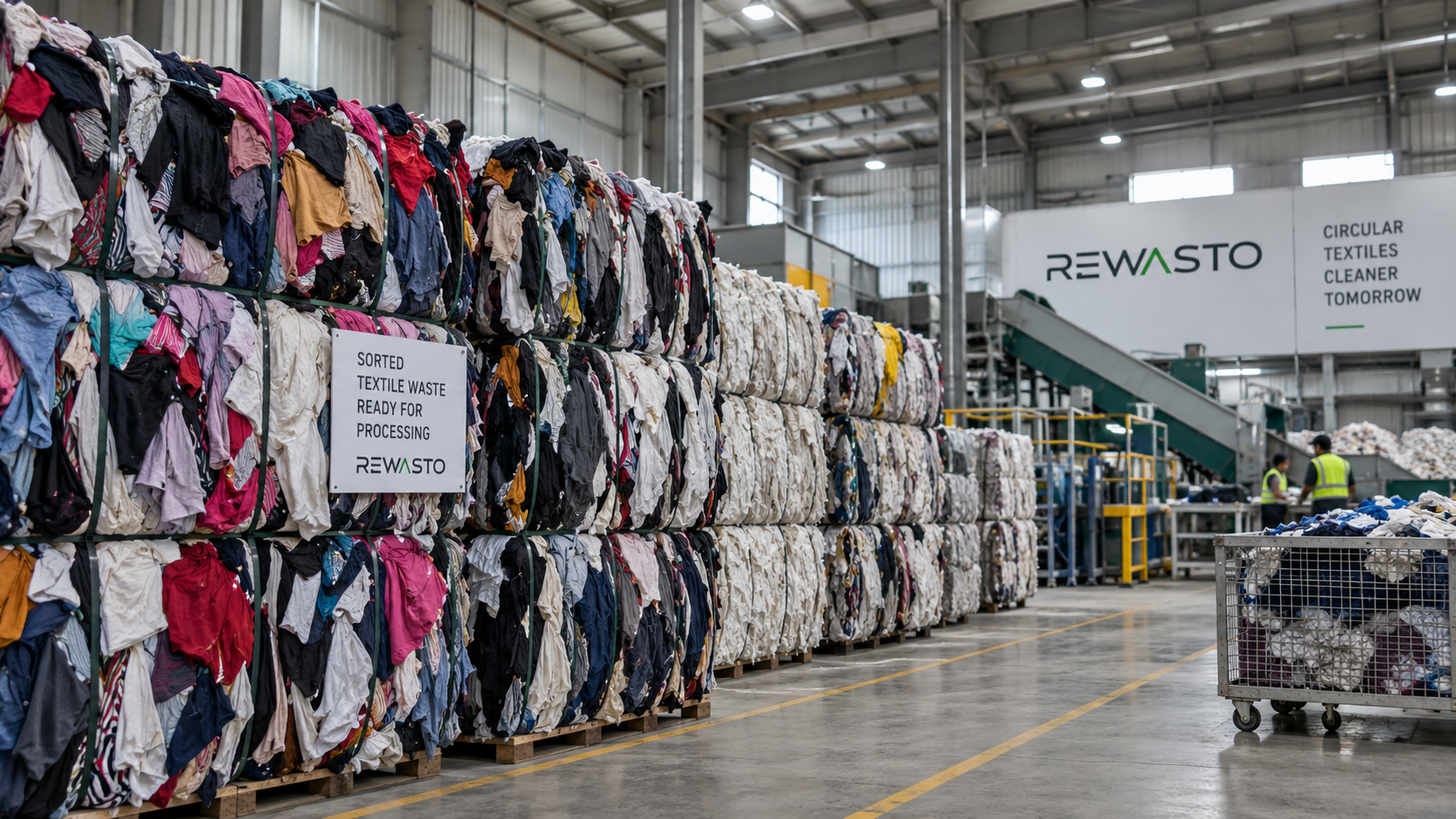
India's stake in getting this right is large. A Ministry of Textiles report released this year, Mapping of Textile Waste Value Chain in India, put the country's annual textile waste at roughly 7.07 million tonnes, or about 70.73 lakh tonnes. Private industry estimates put the figure a little higher, closer to 7.5–8 million tonnes, depending on what's counted. Of the government's total, an estimated 42% is pre-consumer waste (offcuts and rejects from spinning, weaving and garmenting), and 58% is post-consumer: clothes and household textiles discarded after use.
The same report found that more than 70% of this waste is already being recovered in some form, mostly through India's large informal and mechanical recycling economy, not through chemical plants like the one Filatex is building. Formal, chemical textile-to-textile recycling remains a small fraction of that recovered share, which is exactly the gap ECOSIS is aiming at.
How much of India's textile waste gets recovered
Source: Ministry of Textiles, Mapping of Textile Waste Value Chain in India, 2026
- Recovered, recycled or reused: 70%+
- Landfilled or otherwise unrecovered: up to 30%
| Cluster | Role | Volume |
|---|---|---|
| Panipat, Haryana | India's primary mechanical-recycling hub | 3,500–5,250 tonnes/day |
| Surat, Gujarat | Polyester-manufacturing hub and waste source | ~762 tonnes/day (~90% polyester) |
| Ludhiana, Punjab | Knitwear and garment clip-waste source | Routed mainly to Panipat & parts of Uttar Pradesh |
This is one piece of a bigger plan
ECOSIS is the largest of five capital projects Filatex has grouped under what it calls its Vision 2028 plan: roughly ₹650 crore of combined investment aimed at turning the company from a pure virgin-yarn manufacturer into what it describes as an integrated circular producer. Alongside the recycling plant, Filatex is expanding its core polyester filament yarn (PFY) capacity, building a project to sell surplus steam from its captive power plant to nearby small industries, and automating manpower-heavy yarn-packaging work with an Italian partner.
Capex vs. projected annual EBITDA impact, by project
₹ crore · figures reported as ranges are charted at their midpoint. Source: Filatex India investor presentation & company disclosures.
| Project | Type | Capex | Annual EBITDA impact | Target |
|---|---|---|---|---|
| ECOSIS textile recycling | Greenfield | ₹300 Cr | ₹75–80 Cr | Sept 2026 |
| PFY yarn expansion | Brownfield | ₹235 Cr | ~₹60 Cr | N/A |
| Steam power distribution | Brownfield | ₹85 Cr | ₹60 Cr | June 2026 |
| Packaging automation | Brownfield | ₹40 Cr | ₹5–6 Cr (savings) | June 2026 |
The clearest sign that ECOSIS has commercial legs, not just ambition, came in December 2025, when Texfil signed a memorandum of understanding with Indeca Sporting Goods, part of the France-based Decathlon Group, to trial ECOSIS recycled chips and yarn across Decathlon India's manufacturing partners, and to explore routing Decathlon's own pre- and post-consumer polyester waste back to Texfil for recycling. For a plant that hadn't yet opened, a demand commitment from one of the world's largest sportswear retailers is a meaningful vote of confidence.
Filatex isn't the only company betting on this stretch of Gujarat coastline. Loop Industries' India joint venture has separately acquired a 93-acre site near Surat, inside the same Petroleum, Chemicals and Petrochemicals Investment Region, for a PET and polyester regeneration facility of its own, with an initial planned capacity of 70,000 tonnes a year and a further expansion to come. It's a different technology bet (Loop's process targets PET and polyester regeneration rather than Texfil's specifically textile-to-textile route) and a different company, but the same geography and the same underlying thesis: Gujarat's existing polyester-manufacturing base makes it the natural place to build India's chemical-recycling capacity.
The regulation catching up behind it
None of this is happening in a vacuum. India doesn't yet have a finalised Extended Producer Responsibility (EPR) regulation for textiles, but the Ministry of Environment, Forest and Climate Change circulated a draft framework in 2024, the first of its kind for the sector, and it points in one direction: mandatory recycled-content targets, phased in over several years, for the producers it covers.
| Fiscal year | Draft textile EPR (recycled content) | Plastic packaging EPR (recycled content, rigid) |
|---|---|---|
| FY 2025–26 | 5% (proposed) | 30% |
| FY 2026–27 | 12% (proposed) | N/A |
| FY 2028–29 | 20% (proposed) | 60% |
If that phase-in looks familiar, it should. It tracks the pattern India has already used for plastic packaging, and for e-waste, batteries, tyres and used oil, all of which now sit under some form of binding EPR obligation, tracked through centralised CPCB portals and enforced through certificates, penalties, and increasingly, environmental compensation for producers who fall short.
There's an export dimension pulling in the same direction. The EU's Ecodesign for Sustainable Products Regulation carries a 2027 compliance deadline that will require documented recycled content from suppliers, which helps explain why a European sportswear group is willing to commit to an Indian recycler before its plant has even opened. France's REFASHION scheme, running since 2007, is one of the models regulators elsewhere are studying as they design their own textile EPR rules. India's is next.
What it means if you're the one holding the compliance obligation
Textile EPR is still on paper. E-waste, plastic and battery EPR are not: they're live today, with annual targets, portal-based reporting, and real financial penalties for producers who miss them. That's the compliance reality most Indian businesses are already sitting inside, whether or not they've registered for it yet.
Rewasto is the team behind that side of the problem: registration, reporting, certification and recycling for producers and brand owners across the National Capital Region. That covers EPR compliance in Gurugram, EPR compliance in Noida, and EPR compliance in Delhi, alongside Rewasto's own e-waste recycling services. If ECOSIS and its neighbours in Gujarat are any indication, a similar shift is coming for textiles too, and the businesses that get their reporting in order now will have an easier time when it arrives.
Sources
- The Hindu: Filatex India to invest ₹300 cr in polyester textile recycling plant in Gujarat
- Apparel Resources: Filatex India Targets Textile Waste
- Indian Textile Magazine: Filatex Charts ₹650 Crore Pathway to Expansion and Sustainability
- Textile Insights: Filatex To Commission India's First Circular Polyester Platform
- Apparel Resources: Texfil Signs MoU with Decathlon
- Fibre2Fashion: India's Textile Recycling Market May Reach $3.5 bn by 2030
- IBEF: India's Textile Recycling Market Projected to Reach US$3.5 Billion by 2030
- National Recycling Corporation: Textile Waste Recycling: The Growing Opportunity for Indian Brands
- Screener.in: Filatex India Ltd: Company Financials
- Loop Industries: India Joint Venture Site Acquisition, Gujarat