India’s New EPR
Trading Portal: Game-Changer
or Compliance Headache?
The EPRETP exchange promises transparency and efficiency, but on the ground, PIBOs and recyclers are wrestling with SSO chaos, EOL bans, price volatility, and a compliance system that is still stabilizing under their feet.

India’s EPR Electronic Trading and Settlement Platform (EPRETP), operated by MSTC under CPCB oversight, went live as the mandatory certificate exchange from March 31, 2026.
What Is This New EPR Trading Portal?
India’s EPR compliance landscape looks very different in 2026 than it did a year ago. The CPCB has moved certificate trading to a fully digital, regulated marketplace through the Electronic Trading and Settlement Platform (EPRETP), operated by MSTC. Instead of informal, bilateral deals between producers and recyclers, the new portal acts as a regulated electronic marketplace where PIBOs and authorised recyclers trade EPR certificates across plastic, e-waste, batteries, tyres, used oil, ELVs, and more.
The ETP sits on top of existing CPCB portals: the Common EPR SSO handles registration and identity verification; waste-specific portals remain the source of truth for certificate generation; and the EPRETP is the trading layer for listing, bidding, and settlement.
The portal is not just a filing window anymore. It is the entire compliance engine — for certificate buyers and for us as the recyclers generating those certificates.
Rewasto compliance team, May 2026Where Recycling Targets Stand Right Now (FY 2025-26)
The Big Shift: SSO and Mandatory Online Trading
From 31 March 2026, CPCB effectively moved all EPR certificate trading to the Electronic Trading Platform, accessible only via the Common EPR Single Sign-On (SSO). This means producers must register on epr.cpcb.gov.in and link all existing EPR accounts to SSO. After the cut-off, certificate trading is not accessible without SSO-linked credentials.
On paper, the trading lifecycle on EPRETP is clean and logical: recyclers process waste and generate EPR certificates on the relevant CPCB portal; eligible certificates appear on the exchange; PIBOs deposit funds into virtual accounts before bidding; prices are discovered purely through buy and sell orders with no off-platform deals permitted; and once matched, the system settles funds and transfers certificate ownership with identities hidden to preserve market fairness.
CPCB stopped accepting End-of-Life (EOL) disposal certificates — including co-processing and waste-to-energy — for meeting EPR targets. Only certificates from actual physical recycling are now valid. Companies relying on EOL pathways must rebuild their compliance strategy from scratch. As a certified physical recycler, Rewasto generates certificates that fully meet this requirement.
Where Producers Are Struggling
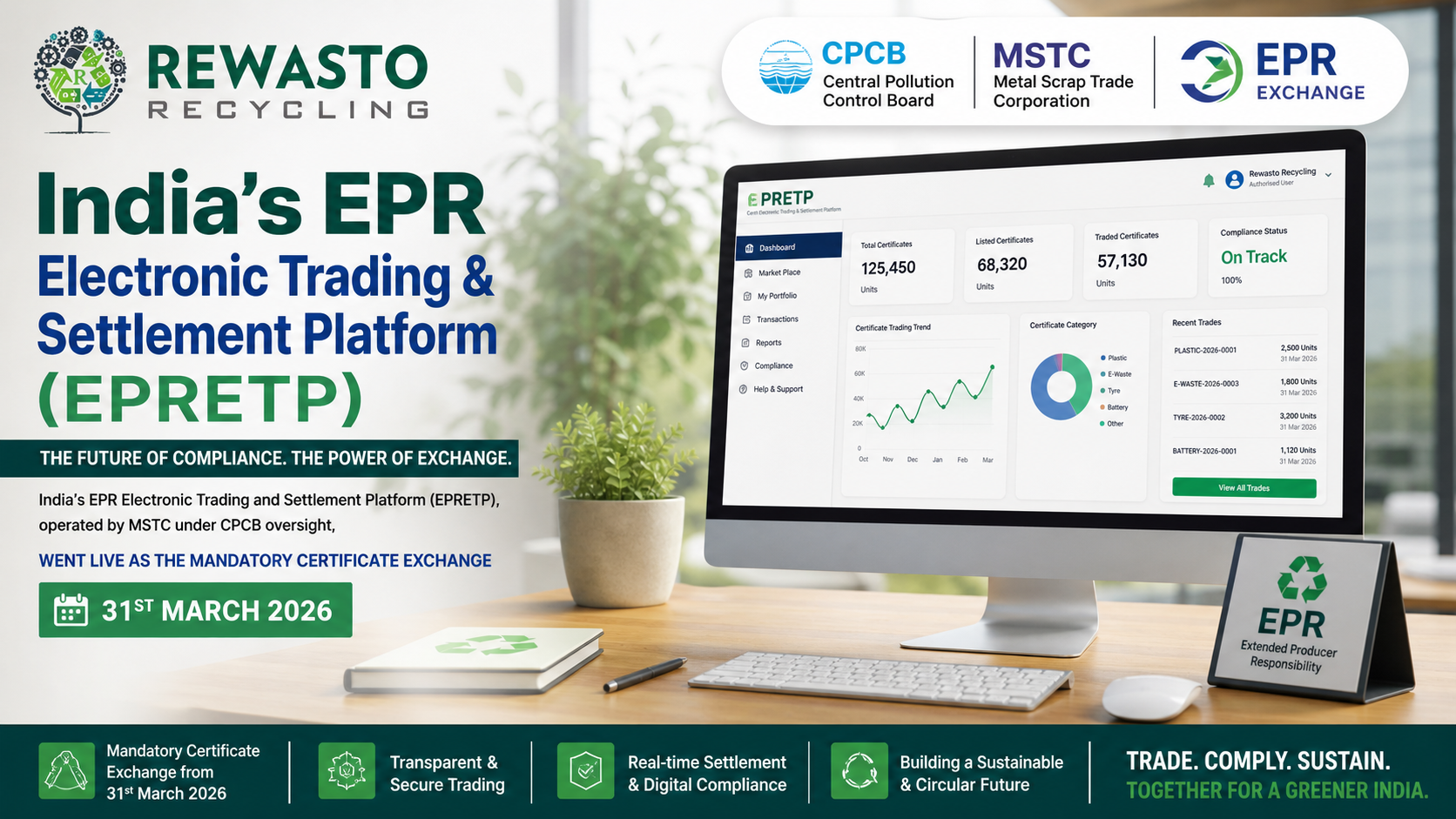
Certificate prices on EPRETP spike sharply in peak compliance months when demand for credits outpaces recycler supply, particularly in e-waste categories.
Five Problems No One Is Talking About Loudly
The Recycler Side of the Ledger
As a CPCB-authorised recycler, Rewasto operates directly inside this system. We see both the opportunity and the friction firsthand. The new platform creates real commercial possibilities for well-organised operators — but the documentation burden, cash flow timing, and capacity verification requirements are raising barriers to entry and squeezing margins for smaller players.
To generate tradable EPR certificates, recyclers must maintain up-to-date registration on relevant CPCB portals, ensure that Consent to Operate (CTO), Consent to Establish (CTE), and all permits are valid and correctly reflected, and upload accurate processing data in line with revised target structures and traceability requirements. Any gap here delays certificate issuance — and directly delays a producer’s ability to comply.
What Non-Compliance Actually Costs in 2026
| Violation | Consequence | Scale | Status |
|---|---|---|---|
| Missing annual recycling targets | Environmental Compensation tied to shortfall quantity | Up to ₹1 crore | Active enforcement |
| Late or missing returns | ₹1 lakh initial + ₹5,000 per day of delay | Escalating | Routine trigger |
| Using EOL certificates post-Jan 19, 2026 | Full filing rejection, treated as non-compliant | Full EC exposure | Now in force |
| Overloaded recycler certificate | Certificate disallowed, obligation must be re-met | Double cost risk | AI-monitored |
| CPCB registration cancellation | Cannot place covered products in market | Business halt | Repeat offenders |
| Willful evasion | Criminal prosecution under EPA 1986 | Up to 5 yrs jail | Escalating |
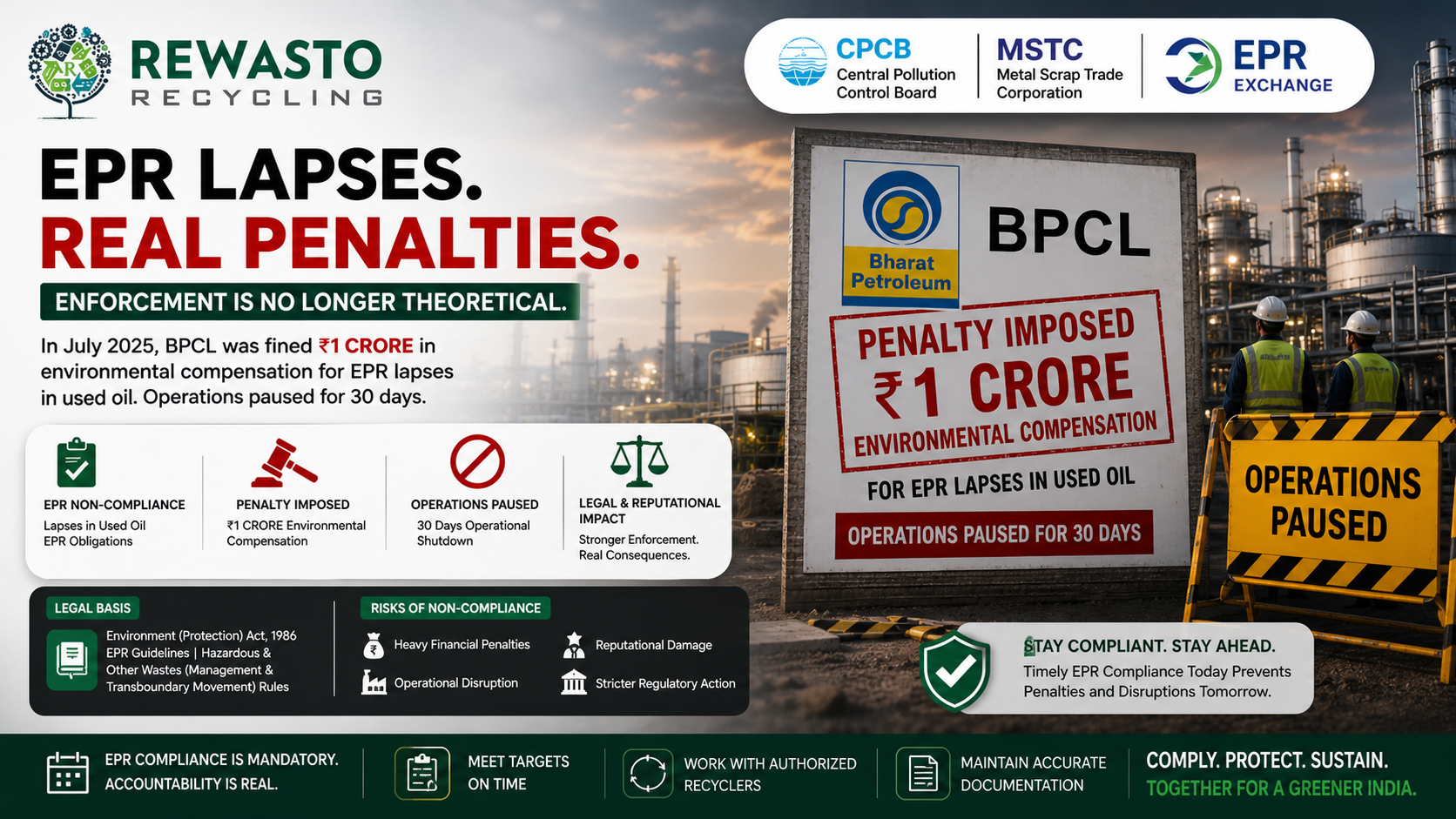
In July 2025, BPCL was fined a crore in environmental compensation for EPR lapses in used oil. Operations paused for 30 days. Enforcement is no longer theoretical.
EPR obligations expanded from April 1, 2026 to cover non-ferrous metal scrap (aluminium, copper, zinc, their alloys) and construction and demolition waste. Companies in metal manufacturing or import now need CPCB registration under this new stream in addition to any existing EPR obligations.
What Smart Businesses Are Doing Right Now
| Action | For PIBOs | For Recyclers | Priority |
|---|---|---|---|
| SSO & Portal Hygiene | Link all accounts on epr.cpcb.gov.in immediately. Fix data mismatches before they freeze trading. | Ensure CTE, CTO and permits are correctly reflected on portal. Any gap delays certificate issuance. | Do this first |
| Recycler Network | Verify every recycler’s current capacity directly on CPCB portal before purchasing. Keep audit trail. | Upgrade traceability systems so material processed is provably linked to certificates issued. | High urgency |
| EOL Transition | Replace any EOL certificate reliance with genuine recycler agreements immediately. Count the gap. | Opportunity to onboard PIBOs shifting away from EOL pathways. Formal capacity is in demand. | Ongoing |
| Auction Management | Treat EPRETP bidding as a procurement function. Plan early, fund virtual accounts ahead of peak season. | List certificates consistently and monitor pricing trends to avoid leaving value on the table. | Plan now |
| Multi-Stream Check | Audit all product lines: does anything you sell create obligations across more than one stream? | Understand which streams your authorization covers and where you can grow certified capacity. | Foundational |
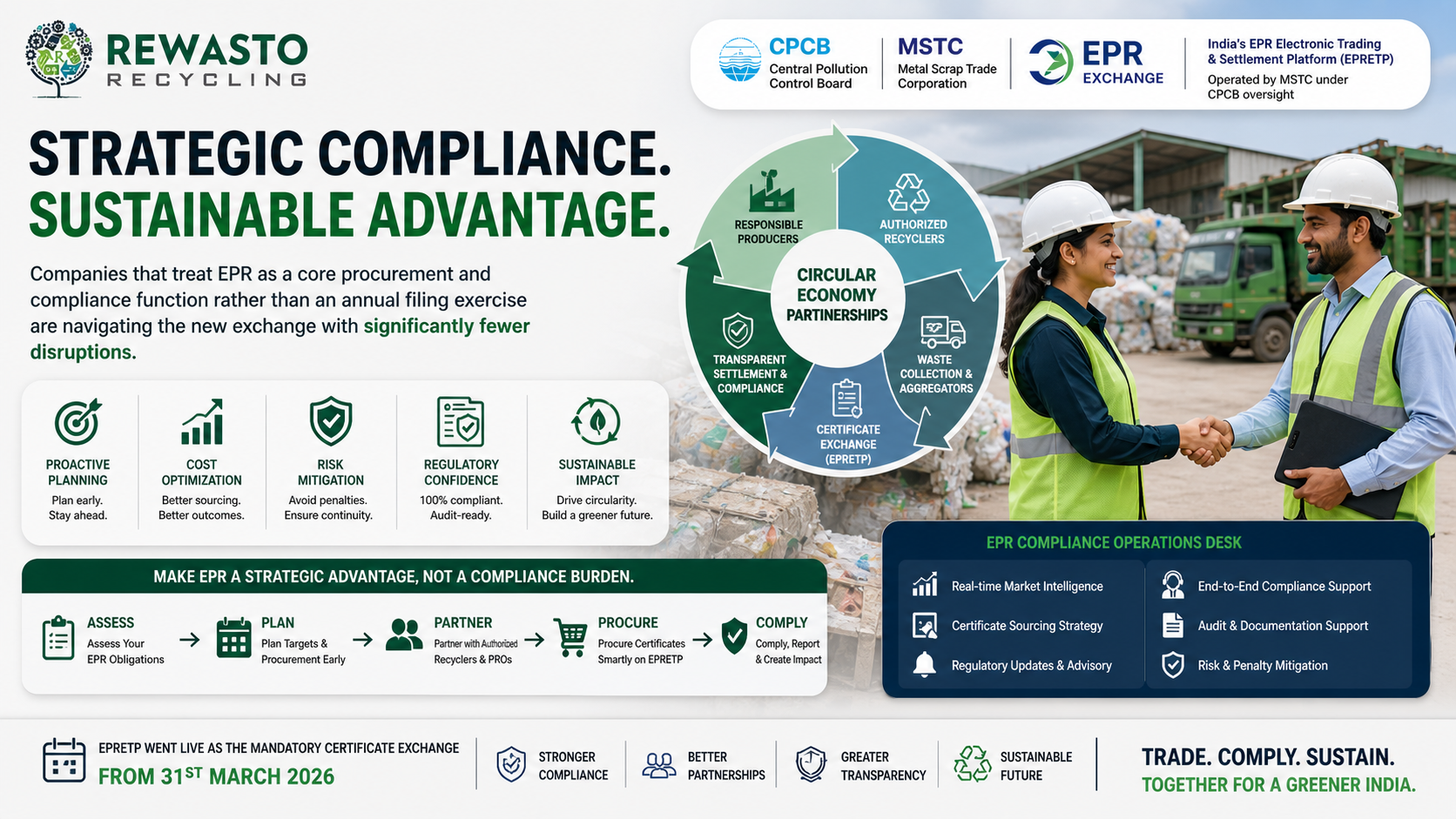
Companies that treat EPR as a core procurement and compliance function rather than an annual filing exercise are navigating the new exchange with significantly fewer disruptions.
India’s new EPR trading portal is undeniably a big step forward in terms of transparency, traceability, and market-based environmental compliance. At the same time, producers and recyclers are right to feel that the system is demanding, unforgiving, and still stabilizing. The winning strategy is not just “register and hope” — it is to treat EPR as a core compliance and commercial function, backed by strong data, the right partners, and a clear understanding of how the EPRETP ecosystem really works.
How Rewasto Works With You
Rewasto is a CPCB-authorised recycler with boots on the ground across multiple waste streams. We physically process material, generate fully traceable EPR certificates, and help producers navigate the EPRETP ecosystem — so your compliance is defensible from collection through to certificate settlement.